
Best Plants for a Coastal Garden in Sussex: What Actually Thrives by the Sea
Choosing the right coastal garden plants Sussex gardens need can transform a challenging seaside garden into something truly beautiful. If you live near the Sussex coast, you already know your garden plays by different rules. Salt spray on the wind, thin chalky soil that drains almost too well, and gusts that flatten anything fragile — it can feel like the odds are stacked against you. But here’s what I’ve learned designing coastal gardens across Worthing, Shoreham, Brighton and Chichester: the best coastal garden plants for Sussex don’t just survive. They look genuinely beautiful, and they need far less fussing over than you might expect.
The trick is choosing the right coastal garden plants from the start — ones built for Sussex’s coastal conditions, not fighting against them.
What Makes a Plant Coastal-Ready?
Not every pretty plant from the garden centre will cope a mile from the sea. The ones that do tend to share a few traits:
- Waxy, leathery or silvery leaves — these surfaces shed salt and hold onto moisture when the wind is drying everything out.
- Deep or spreading roots — essential for anchoring into Sussex’s thin, free-draining chalk or sandy coastal soils.
- Flexible stems — rigid growth snaps in strong gusts, but plants that bend and sway ride out even the worst winter storms.
- A natural tolerance of lean soil — coastal soil is often low in nutrients, so the best performers are those that don’t need rich, heavy ground to thrive.
When I’m putting together a planting plan for a coastal garden, I look for plants that tick at least two or three of these boxes. That’s how you build a garden that settles in quickly and looks better with each passing year.
10 Best Coastal Garden Plants Sussex Gardens Love
These are the best coastal garden plants Sussex gardeners can rely on — reliable, beautiful, and genuinely suited to life near the sea.
1. Griselinia littoralis
If I could only recommend one evergreen shrub for a coastal garden, it would be Griselinia. Glossy, apple-green leaves that look fresh all year round, and it shrugs off salt spray without a mark. It makes an excellent informal hedge or backdrop, grows steadily to around 3–4 metres, and clips beautifully if you want something tidier. It thrives in the free-draining soil you find right along the Sussex coast.
2. Escallonia ‘Apple Blossom’
A classic for good reason. Dense, glossy foliage and soft pink-and-white flowers through summer — it’s one of the most reliable flowering hedging plants for exposed seaside spots. I often use it to create a living windbreak that doubles as a feature. It handles salt-laden air without complaint and attracts pollinators all season.
3. Stipa tenuissima (Mexican Feather Grass)
Nothing captures that relaxed coastal feeling quite like ornamental grasses moving in the breeze. Stipa tenuissima is a favourite — fine, silky plumes that catch the light and sway beautifully. It self-seeds gently into gravel and paving cracks, which gives a garden that natural, settled-in look. Plant it in drifts for the best effect.
4. Eryngium (Sea Holly)
A genuinely coastal native — you can find wild Sea Holly growing on shingle beaches along the Sussex coast. The spiky, steel-blue flower heads are striking from midsummer well into autumn, and the architectural form works brilliantly in a contemporary or naturalistic planting scheme. It’s drought-proof and thrives in poor, sandy ground where other plants would struggle.
5. Lavandula angustifolia ‘Hidcote’
Lavender is almost tailor-made for Sussex coastal conditions: it loves sun, needs sharp drainage, copes with chalk, and doesn’t mind a bit of salt on the wind. ‘Hidcote’ gives you deep purple flowers and a compact habit — perfect along paths, in borders, or spilling over a low wall. The scent alone is worth the planting.
6. Phormium tenax (New Zealand Flax)
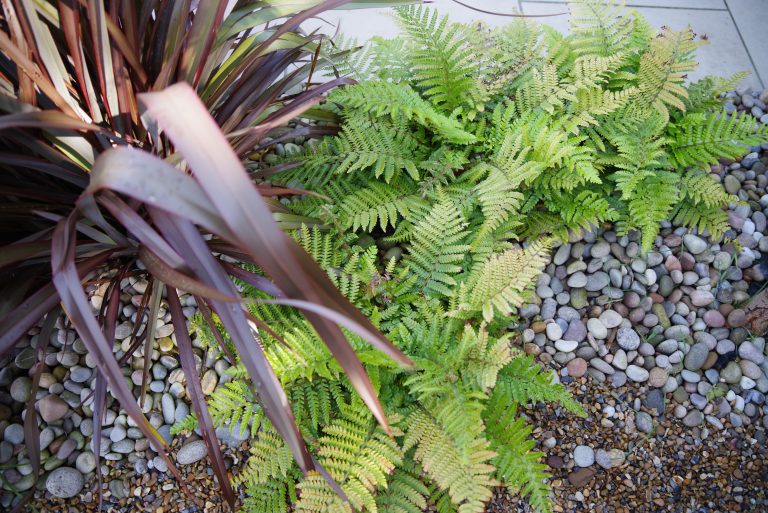
For bold, structural planting, Phormium is hard to beat. The sword-shaped leaves — available in deep bronze, green, or variegated — create a strong focal point and cope with wind, salt and drought without breaking stride. I use them to anchor a border or to add year-round architecture to a gravel garden. They’re completely at home on the Sussex coast.
7. Erigeron karvinskianus (Mexican Fleabane)
This little daisy is a coastal garden workhorse. Once established, it threads its way through cracks in paving, tumbles over walls and self-seeds into exactly the right spots. The tiny white-and-pink flowers appear from late spring right through to the first frosts. It softens hard landscaping beautifully and gives a garden an effortless, lived-in charm.
8. Hebe ‘Great Orme’
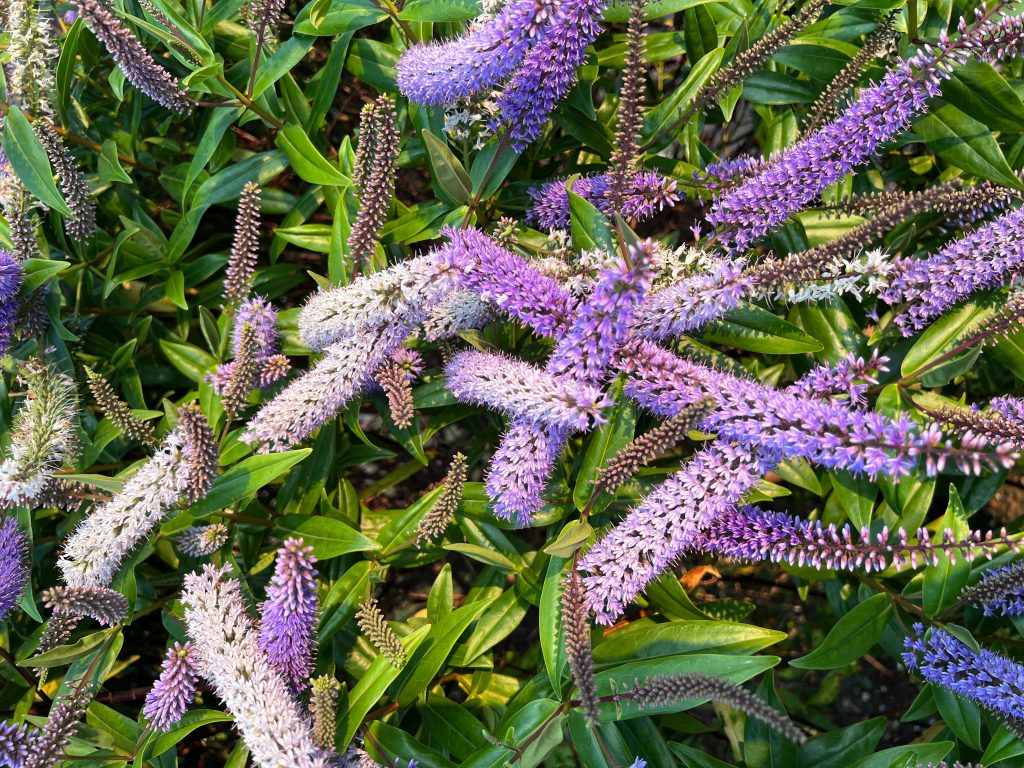
Hebes are among the most dependable evergreen shrubs for coastal conditions, and ‘Great Orme’ is one of the best — long spikes of bright pink flowers from midsummer to autumn over neat, glossy foliage. It stays compact (around a metre), so it works well in smaller gardens. Salt-tolerant, wind-resistant, and it rarely needs pruning.
9. Crambe maritima (Sea Kale)
Another genuine Sussex native. The silvery, fleshy leaves are sculptural on their own, and then clouds of tiny white honey-scented flowers appear in early summer. It’s completely adapted to coastal chalk and shingle — it actually looks its best in the leanest conditions. A wonderful plant for adding character to a front garden or a sunny, well-drained border.
10. Elaeagnus × ebbingei
If you need a tough, fast-growing evergreen screen, Elaeagnus is one of the best choices for the coast. Silvery-green leaves that shimmer in the breeze, and tiny fragrant flowers in autumn that you’ll smell before you see. It copes with poor soil, salt spray, and strong winds — I’ve used it on some very exposed sites in Worthing and Shoreham where it’s thrived from day one.
Design Tips for Coastal Gardens in Sussex
The right plants are only part of the picture. How you put a coastal garden together makes all the difference between something that feels like it belongs and something that always looks like it’s struggling.
Create shelter first
This is the single most important thing you can do. A semi-permeable windbreak — a planted hedge, a slatted timber screen, or a combination — filters the wind rather than blocking it (solid walls actually create worse turbulence on the other side). Even a modest hedge reduces wind speed for a distance of around ten times its height, which opens up a much wider range of planting in its shelter.
Plant in layers
Start with tough, structural plants on the windward side — Griselinia, Elaeagnus or Escallonia — and work towards more delicate planting in their shelter. This mimics how natural coastal landscapes build up, and it means every plant is growing in conditions that suit it.
Use gravel and shingle
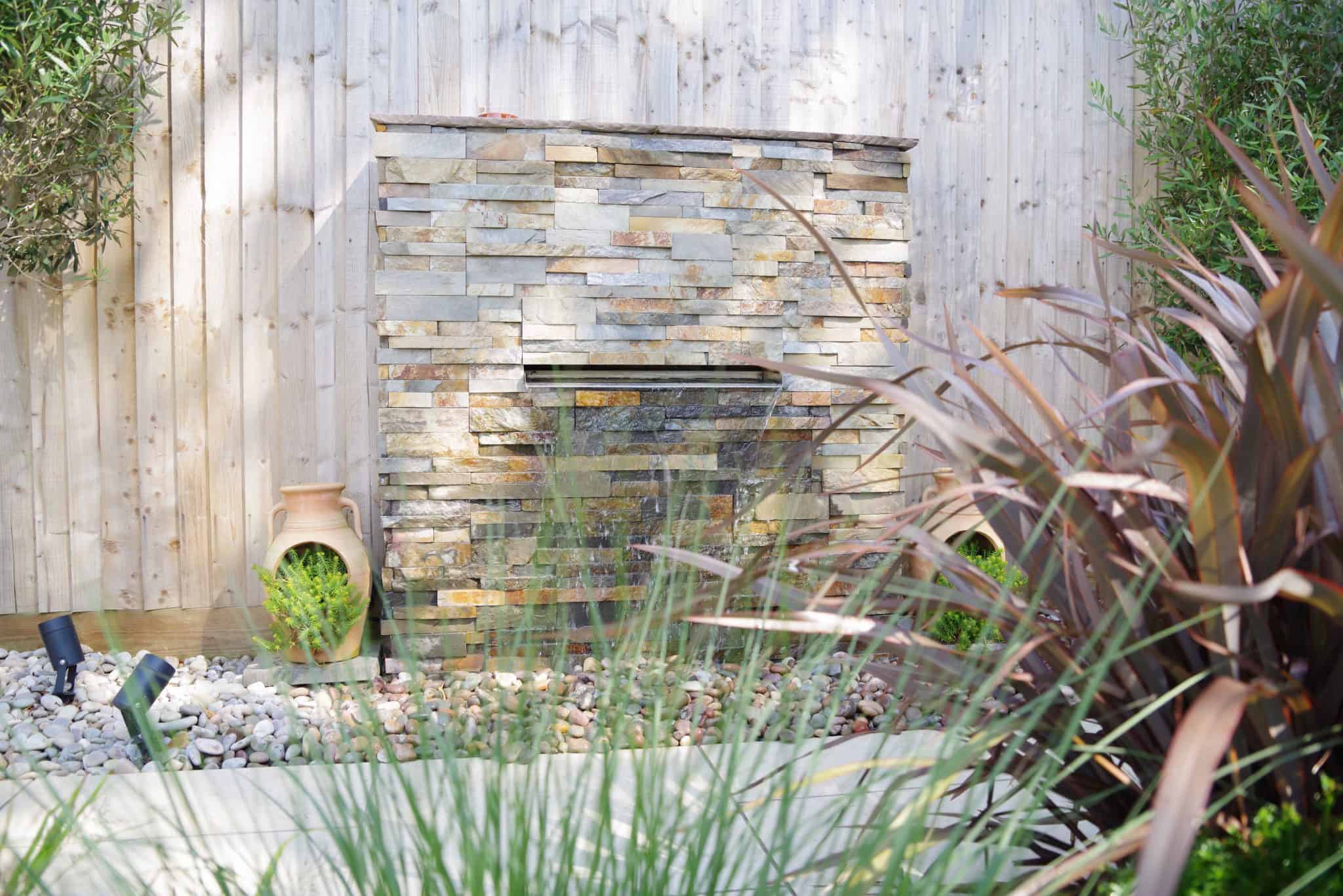
Gravel mulch is a natural fit for coastal Sussex gardens. It keeps roots cool, conserves moisture, provides the sharp drainage that Mediterranean and coastal plants love, and it looks right — it connects the garden to the surrounding landscape. A gravel garden also needs very little maintenance compared to a traditional lawn-and-border setup.
Think year-round
The best coastal gardens have something to offer in every season. Mix evergreen structure (Griselinia, Phormium, Hebe) with seasonal interest (Eryngium in summer, grasses catching winter light, Erigeron flowering for six months straight). A well-planned planting scheme means the garden never hits a dull patch.
A Garden That Works With the Coast, Not Against It
The most rewarding coastal gardens I’ve designed are the ones that embrace where they are. Rather than battling the conditions, they lean into them — and the result is a garden with real character, lower maintenance, and a feeling of place that’s hard to achieve any other way.
If you’re thinking about what your coastal garden could become, I’d love to hear about it. A discovery call is a good place to start — it’s a relaxed conversation about your garden, your ideas, and how we might bring them together.


For more on choosing plants for challenging coastal conditions, the RHS guide to coastal perennials is an excellent starting point.
Ready to Talk About Your Garden?
Every garden transformation starts with a conversation. Book a free Discovery Call and tell us about your space.
Book a discovery call Send us a message