
When to Plant Spring Bulbs in Sussex: What the Packet Doesn’t Tell You
The bulb bags are back in the garden centres, and I’m always a little pleased to see them.
Rows of net bags, each one printed with the same cheerful instruction: Plant September–November. Which is rather like a recipe that says “cook until done”.
Because the difference between a border that looks planted next April and one that looks like a happy accident is decided now, in autumn, by a handful of small decisions the packet never mentions. None of them are difficult. Most of them are things nobody told you.
I plant a lot of bulbs on Sussex chalk and a fair few on Wealden clay, for clients from Worthing to Horsham, and I’ve learned to do a few things differently from the instructions on the bag. Here they are — when to plant spring bulbs, how deep, where, and which ones actually suit the ground you’ve got.
When to plant spring bulbs: go by the soil, not the calendar
Bulbs root in autumn and flower in spring. What they want now is soil still holding a little of summer’s warmth, so the roots get going underground before the cold shuts everything down. That’s why “September to November” is on the packet — but it’s a window, not a single date, and different bulbs want different ends of it.
Daffodils, alliums, crocus, camassia and snowdrops are happiest in the ground by mid-October. On the Sussex coast, where the soil stays warm a little longer than it does inland, you have until the end of the month without any real penalty.
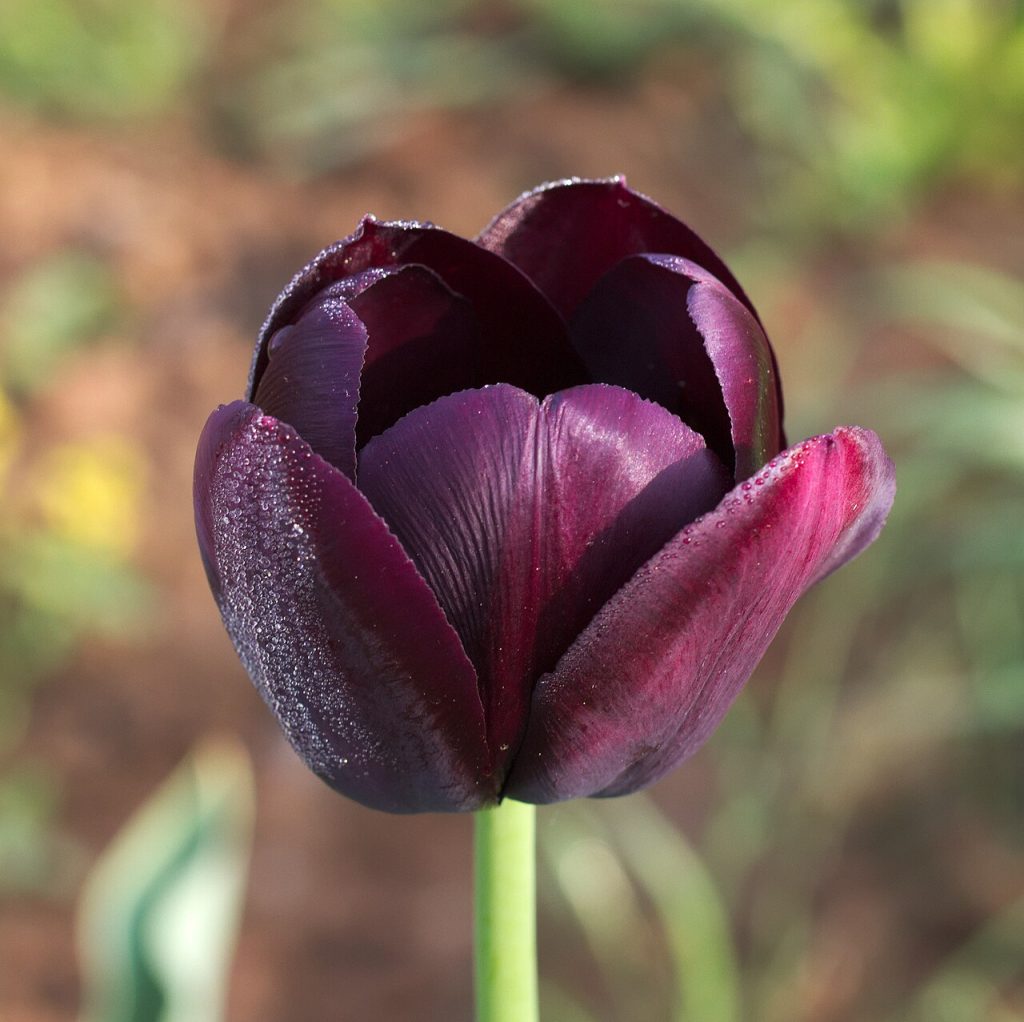
Tulips are the exception, and this surprises people every year. Wait until November. Colder soil suppresses tulip fire (Botrytis tulipae), the fungus that leaves foliage scorched and blotched by April and quietly ruins a display. An early tulip isn’t a keen one. It’s just more likely to be poorly.
If you’re reading this in late November with a bag of daffodils still on the kitchen table — plant them anyway. A late bulb flowers a little later and a little shorter. An unplanted one doesn’t flower at all.
Go deeper than feels sensible
The rule is two to three times the height of the bulb in soil above it. So a daffodil bulb five centimetres tall wants ten to fifteen centimetres of soil over its nose; a tulip wants 15–20 cm; a small crocus is happy at eight.
Almost nobody does this, and it’s the commonest reason bulbs disappoint. A shallow bulb dries out in a spring drought, heaves up in a frost, and is found by the first squirrel with an afternoon free.
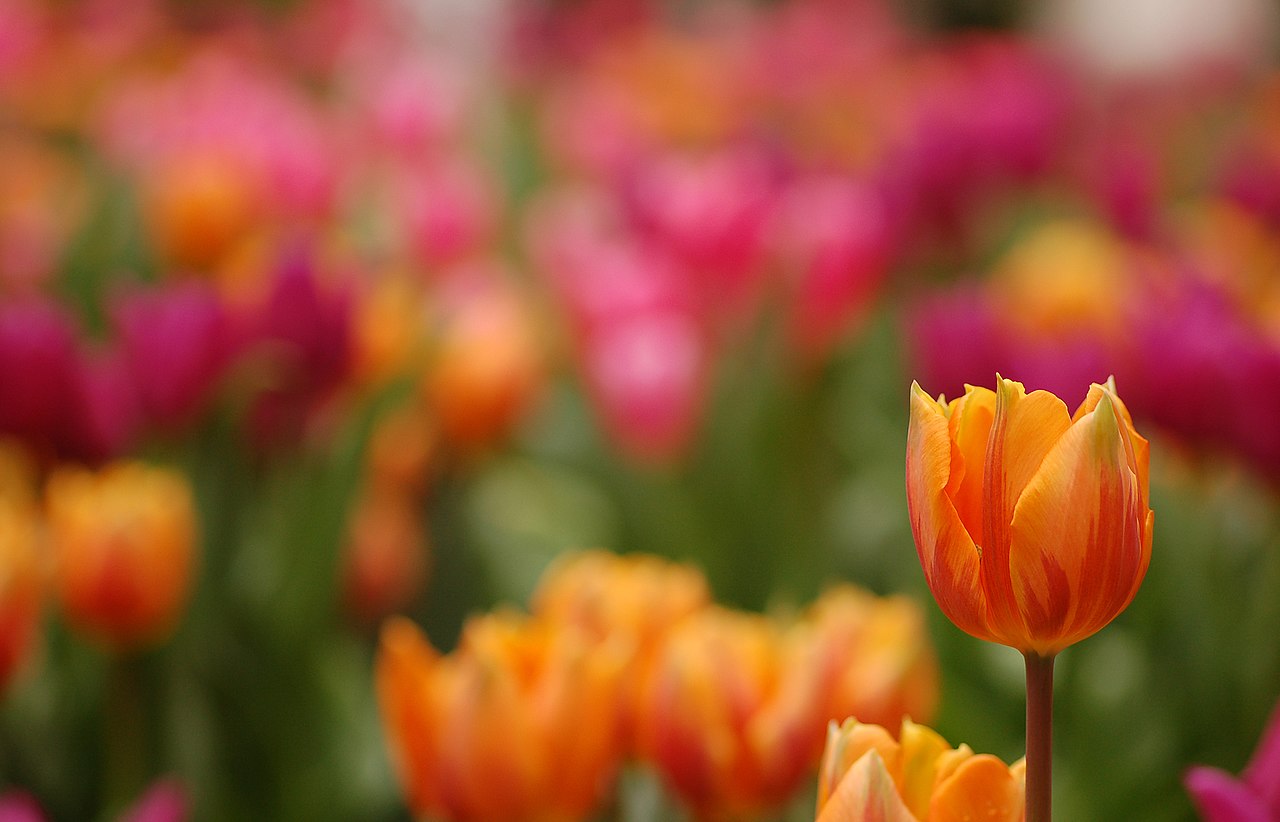
Depth matters for tulips in a second way. A tulip planted shallow tends to split into a cluster of small offsets, which is why so many come back in year two as a tuft of leaves and no flower. Planted deep, the bulb stays whole and flowers again.
On chalk — most of the ground between Chichester and Brighton — the first spade’s depth is easy and the second is flint. A long-handled bulb planter, the kind you tread in, is worth every penny here. On heavy Wealden clay the digging is easier but the drainage is worse, which brings us to the next point.
Know your ground: bulbs for chalk, clay and the coast
This is the part the packet can’t tell you, because the packet doesn’t know where you live.
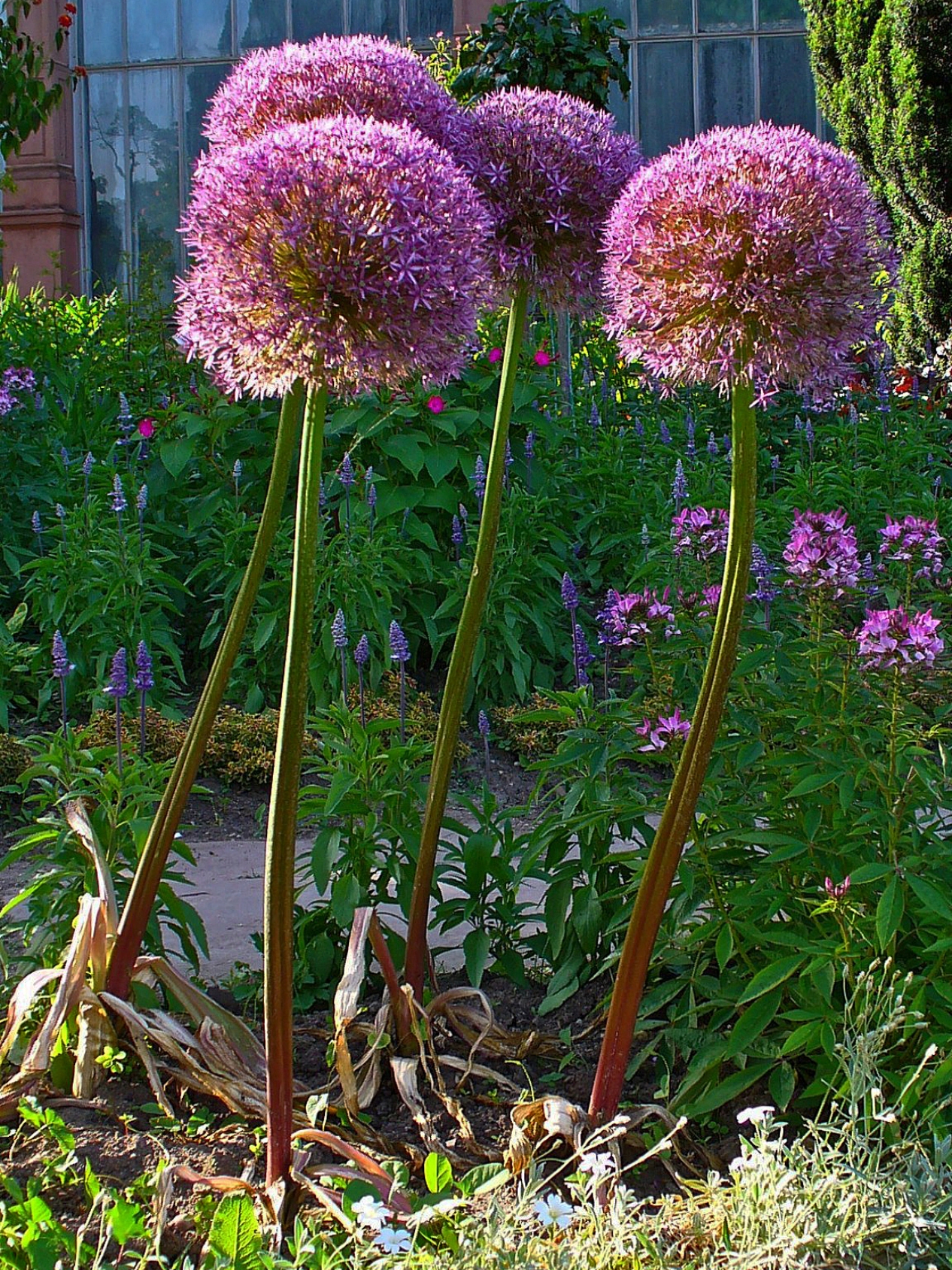
Chalk. Free-draining and alkaline. Tulips, alliums, crocus, Nectaroscordum and most narcissi are entirely at home — many of them come from dry hillsides in Turkey and the Mediterranean and think Sussex chalk is home. What chalk doesn’t suit is anything that wants damp feet: camassia and snake’s-head fritillary will sulk and fade.
Wealden clay. Inland, north of the Downs, the ground holds water through winter. Camassias, fritillaries, narcissi and snowdrops thrive here. Tulips and alliums rot unless you sit each bulb on a handful of horticultural grit, or grow them in pots where you control the drainage.
The coast. Salt wind is the issue, not the soil. Choose shorter cultivars that don’t snap in a March gale off the Channel — dwarf narcissi such as ‘Tête-à-tête’ and ‘Jetfire’, species tulips, crocus — and plant the taller alliums where a wall or hedge takes the edge off the wind. (I’ve written more about choosing plants that suit the seafront in my guide to coastal garden plants for Sussex.)
If you’re not sure which you’ve got: dig a hole, fill it with water, and see whether it’s gone in an hour (chalk or sand) or still there in the morning (clay).
Drifts, not rows
The eye reads repetition as intention. A straight line of tulips along a path reads as a municipal roundabout; the same tulips in three loose, overlapping groups read as a garden.
So plant generous groups of one variety — twenty-five alliums in a single drift will do far more for a border than twenty-five different things dotted about. Tighter at the centre, thinning towards the edges, odd numbers if you can.
For daffodils and crocus in grass, the old trick is still the best one: throw a handful and plant them where they land. It feels careless. It’s the only way to make them look as though they’ve always been there.
And repeat. If you use a variety at one end of a border, use it again in the middle and at the far end. That rhythm is most of what people mean when they say a garden “looks designed”.
Think about June before you plant for April
The leaves are the point.
After flowering, a bulb’s foliage carries on photosynthesising for about six weeks, sending sugars back down to build next year’s flower. Cut it, tie it in knots, or mow it early and the bulb starves — a year in arrears, so you never connect the two.
The answer is to plant bulbs where something will grow up and hide the dying leaves. Hardy geraniums, hostas, Alchemilla mollis, ornamental grasses and late-emerging perennials all do the job beautifully: by the time the daffodil leaves are yellowing, the geranium has covered them. Plan the disappearing act so nobody sees it.
In grass, the same rule means not mowing until the bulb leaves have died back — usually mid-June for daffodils. If a tidy lawn matters to you, keep naturalised bulbs to one area you’re happy to leave long until midsummer, and mow a crisp path through it. Long grass with a sharp edge reads as intentional. Long grass everywhere reads as neglect.
Layer the pots
For a courtyard, a balcony or a spot by the back door, a “bulb lasagne” gives you flowers from February to May from a single pot. Large bulbs at the bottom — tulips at 20 cm — then daffodils, then crocus near the surface, each layer offset so they grow past one another. Use a pot at least 30 cm deep, peat-free compost with grit mixed through, and stand it somewhere it won’t sit in water over winter. It’s the single best thing to do with a bag of mixed bulbs.
The bulb I’d plant on Sussex chalk before any other
Some bulbs are pretty. Nectaroscordum siculum — Sicilian honey garlic, sometimes sold as Allium siculum — is interesting, which lasts longer.
It comes from Sicily and Turkey, so it wants sun and sharp drainage, and it thinks our chalk is home. In late May the stems reach a metre and hang out umbels of little bells, cream flushed with plum and green. Then, as the flowers finish, every seed pod turns upright and the whole head becomes a candelabra that dries to parchment and stands into winter. Bees work it hard. Crush a leaf and you’ll understand the name.
Plant it 10–15 cm deep in October, in full sun, woven through Stipa tenuissima or hardy geraniums so the stems rise out of something that hides the leaves as they fade. The one thing that kills it is winter wet — on clay, sit it on grit. And leave the seed heads; cutting them off in July throws away half the plant.
A quick October bulb checklist
- Daffodils, alliums, crocus, camassia: in the ground by mid-October
- Tulips: November, when the soil is cold
- Depth: two to three times the bulb’s height — 15–20 cm for tulips
- Chalk: tulips, alliums, crocus, Nectaroscordum. Clay: camassia, fritillaries, narcissi. Coast: shorter cultivars
- Drifts of one variety, odd numbers, repeated along the border
- Plant among perennials that will hide the dying leaves
- Leave foliage six weeks after flowering
- Pots: layer them, and keep them out of standing water
A final thought
Bulb planting is the one job in the garden done entirely on trust. You bury something that looks like a small brown onion, in October, on the strength of a picture on a packet, and wait six months.
Which, when you think about it, is most of garden design. The difference between hope and a plan is knowing what’s happening underground in the meantime.
At Studio Hummingbird the bulb layer is drawn into every planting plan in autumn, never added as an afterthought in spring — it’s the one layer you can’t convincingly add later. If you’d like a second pair of eyes on what your garden could carry into next spring, a Garden Clarity Visit is a lovely place to start. Or, if you’re still working out what you want, book a free Discovery Call and we’ll talk it through.
And if autumn has you thinking beyond bulbs, my five autumn garden design ideas for Sussex homes is a good next read.
Victoria Rumens is a garden designer based in Worthing, working across Sussex and Surrey.
Ready to Talk About Your Garden?
Every garden transformation starts with a conversation. Book a free Discovery Call and tell us about your space.
Book a discovery call Send us a message